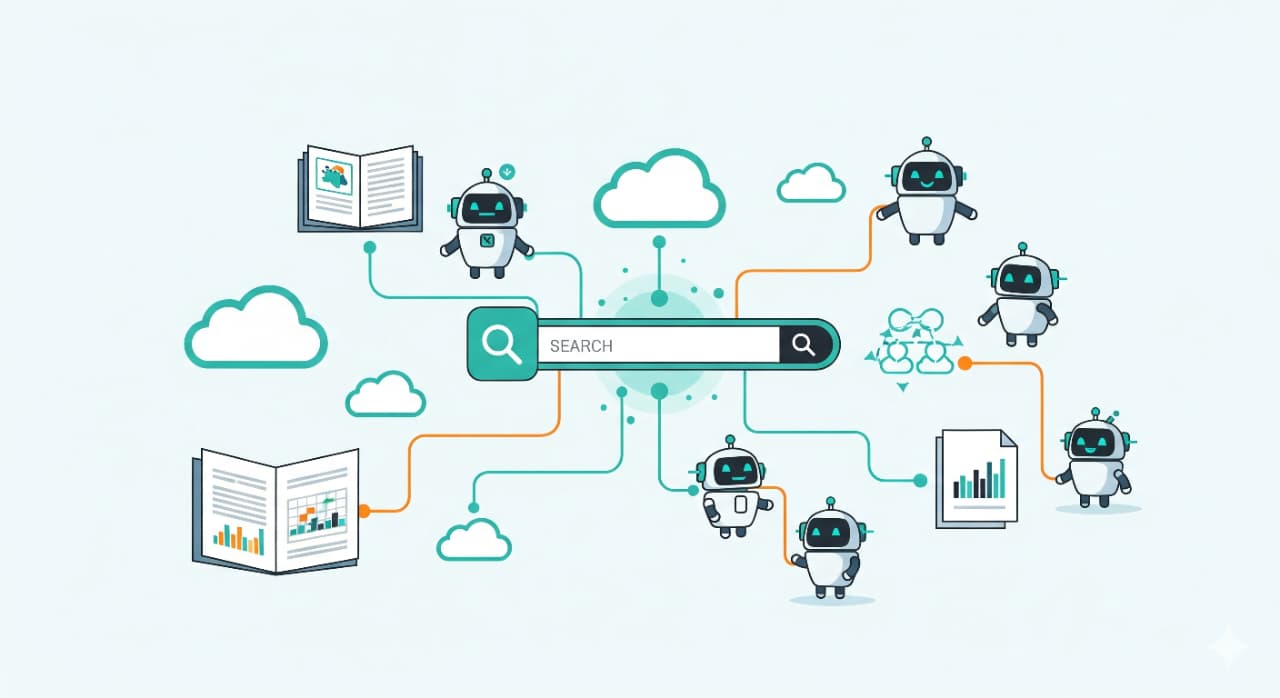
OpenAI Agents SDK: A Practical Alternative to LangChain, LlamaIndex, and AutoGen
The OpenAI Agents SDK provides enterprises with a production-ready framework for building intelligent AI agents. Unlike LangChain, LlamaIndex, or AutoGen, it balances simplicity, flexibility, and stability—making it ideal for businesses ready to scale AI adoption. Learn when to use it, when not to, and how it compares to other frameworks.
As enterprises move beyond experimentation with generative AI, a new challenge emerges: how to operationalize AI in real business workflows. While large language models (LLMs) are powerful, companies quickly realize that raw model calls are not enough. What’s needed is a structured framework for building, managing, and deploying agents—AI systems that can reason, plan, and act.
This is where the OpenAI Agents SDK enters the picture.
The OpenAI Agents SDK is a developer framework designed to make it easier to build intelligent, tool-using AI agents. Instead of writing complex orchestration logic, the SDK provides:
Abstractions for agent design (reasoning, memory, planning)
Integration with tools such as APIs, databases, or web search
Control over workflows with event-driven execution
A standardized environment for deploying and scaling agents
In simple terms, the SDK lowers the barrier to transforming a model into a production-ready agent.
For enterprises, the SDK brings three clear advantages:
- 1.
Faster Development – Teams can go from prototype to deployment quickly, without reinventing orchestration.
- 2.
Consistency – Agents built on the SDK follow a reliable structure, making them easier to maintain and scale.
- 3.
Flexibility – Businesses can integrate existing systems, tools, and APIs into their AI workflows.
The SDK transforms AI from a proof-of-concept experiment into a strategic business capability.
A number of frameworks already exist for building AI agents. Let’s compare.
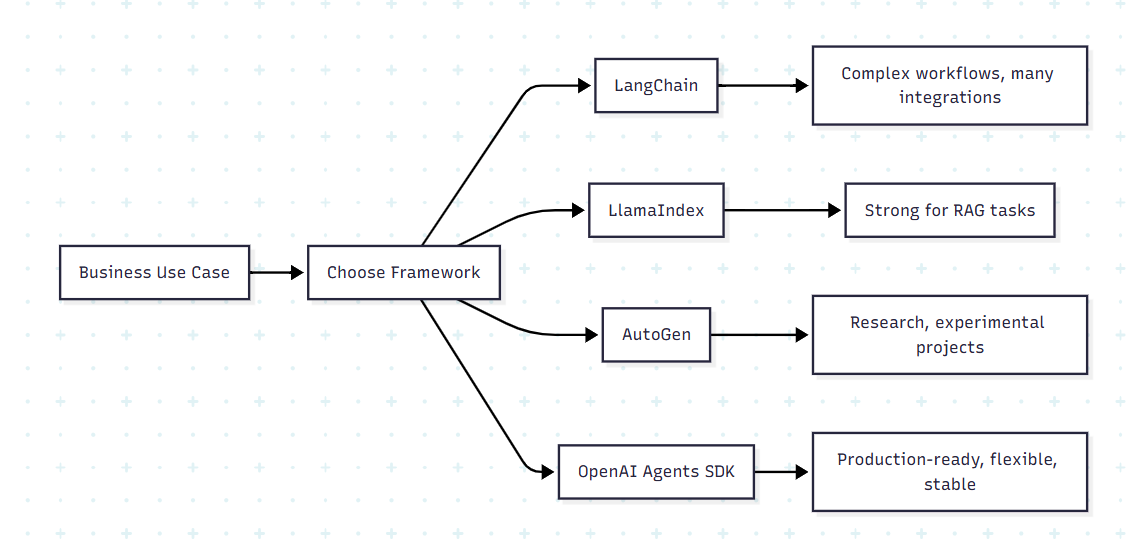
Strengths: Extensive ecosystem, strong community support, wide integration library.
Limitations: Can become overly complex; orchestration logic often bloated; learning curve for enterprise teams.
When OpenAI SDK is better: If your goal is simplicity and production-readiness with fewer dependencies.
Strengths: Excellent for knowledge retrieval, embeddings, and document-based workflows.
Limitations: Narrower focus—primarily retrieval-augmented generation (RAG).
When OpenAI SDK is better: When you need agents that combine RAG with planning and actions, not just data retrieval.
Strengths: Multi-agent collaboration, advanced research-driven use cases.
Limitations: Experimental, less mature, not yet optimized for production workloads.
When OpenAI SDK is better: For enterprise use cases where stability and production support matter more than research exploration.
No tool is perfect. While the SDK provides a strong foundation, it is not always the right choice.
If your primary goal is document retrieval → LlamaIndex may be more efficient.
If you need multi-agent collaboration at scale → AutoGen or specialized frameworks may fit better.
If you want the broadest integration ecosystem → LangChain still leads.
If your business is not ready for production deployment → Simpler prompt engineering may be enough for early experiments.
The SDK is best suited for organizations ready to operationalize AI agents in production.
To illustrate, consider a company wanting continuous market intelligence.
LLM-only approach: Analysts prompt a model to summarize reports.
OpenAI Agents SDK approach: An agent is created with a web search tool, continuously scans sources, extracts insights, validates facts, and produces structured summaries for decision-makers.
This isn’t just output generation; it’s autonomous business intelligence.
The OpenAI Agents SDK is not meant to replace LangChain, LlamaIndex, or AutoGen entirely. Instead, it offers enterprises a balanced, production-ready framework that blends reasoning, tool use, and execution.
Where LangChain shines in breadth, LlamaIndex in retrieval, and AutoGen in experimentation, the OpenAI SDK excels in practicality. It strikes a balance between flexibility and stability—precisely what most enterprises need as they scale AI adoption.
The evolution of AI frameworks reflects a broader trend: businesses no longer want just models, they want systems that act. The OpenAI Agents SDK provides a direct path to building those systems, turning LLMs into true business collaborators.
It is not the only framework available, and it may not always be the right choice. But for enterprises aiming to move fast, deploy confidently, and scale intelligently, it represents one of the strongest foundations today.
Recent Articles
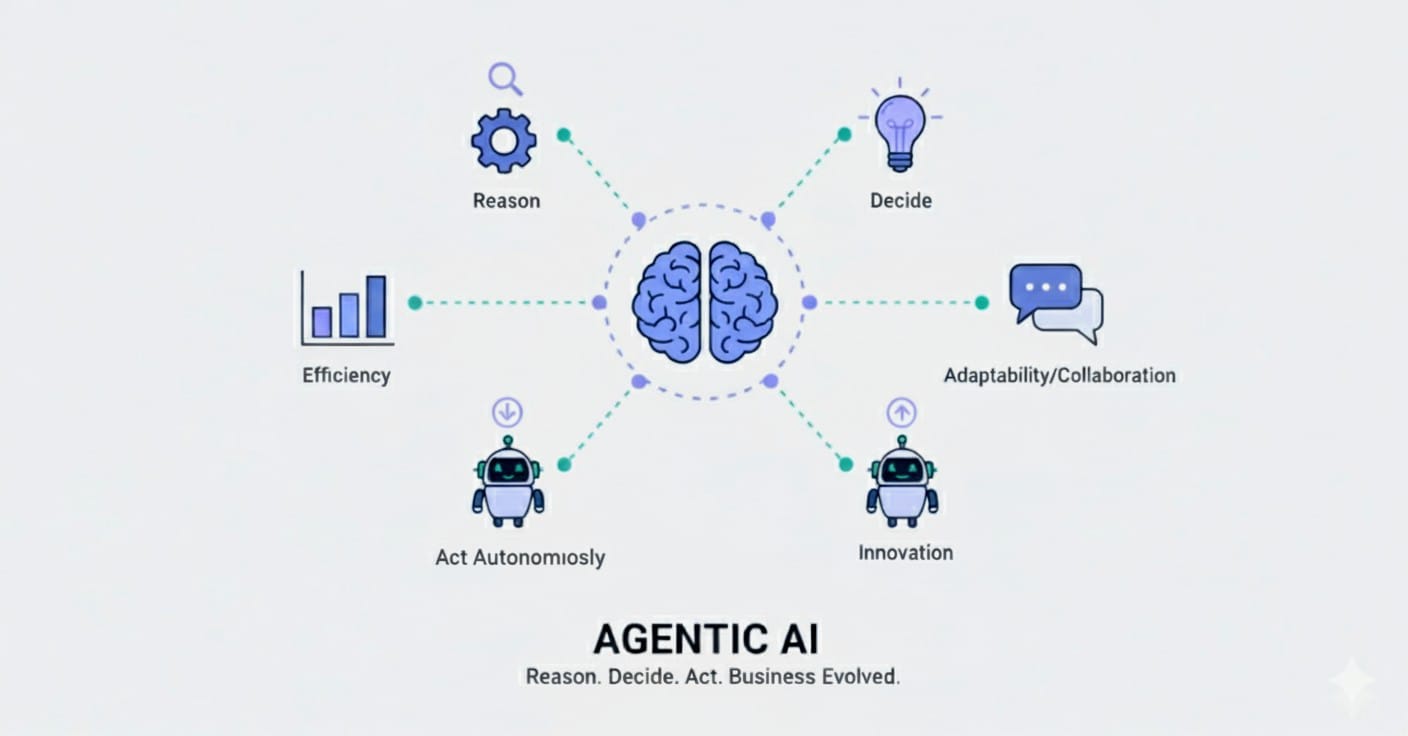
Why Agentic AI? The Future of Intelligent Automation
Agentic AI is more than just another buzzword. It represents the next evolution of artificial intelligence—where systems don’t just respond but reason, decide, and act autonomously. For businesses, this shift means unlocking new levels of efficiency, adaptability, and innovation. In this blog, we’ll explore what Agentic AI is, why it matters, and how companies can start embracing it today.